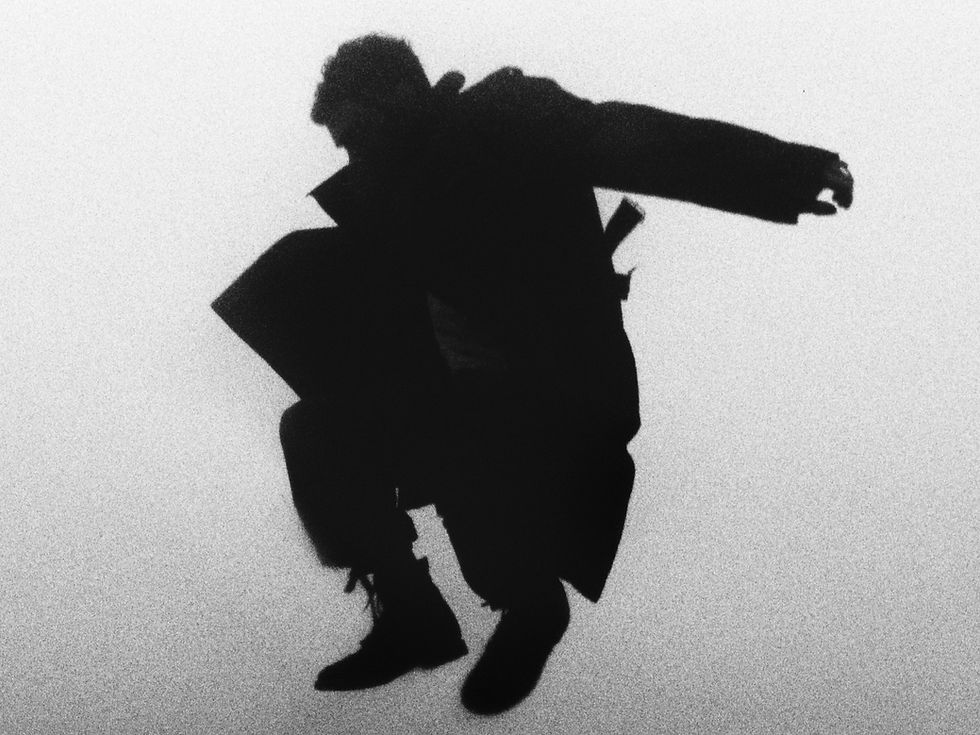
Maggie Rose’s 'Half Moon' Glows in the Space Between Ambition and Intimacy: Album Review


Stand-out tracks: "Used To It" "Gentle Man" "This Life"
Our favorites: "Weekend Lover" "Half Moon" "Hiding in Plain Sight"
Release date: August 14, 2026
Label: One Riot Records
For fans of: Kacey Musgraves, Brandi Carlile, Olivia Dean
A half moon symbolizes new beginnings, growth, intuition, and transition. Maggie Rose is no stranger to any of that, and her fifth studio album, Half Moon, released August 14 via One Riot Records, is proof that more than a decade into her career, she's flying higher than ever. Enlisting Daniel Tashian (Kacey Musgraves, Leon Bridges) and Lawrence Rothman (The Highwomen, Blondshell) to bring her story to life, Maggie Rose's Half Moon tells the story of a rising star whose gravitational pull is more human than we'd all expect. Beneath its sheen, however, is something more intimate, a meditation on what it means to grow into a life that once existed only as an aspiration, and to discover that the most meaningful forms of success are often the ones that cannot be measured from the outside.
Half Moon is told in two deliberate halves, one that glistens with exciting highs and intuitive romance and one that is deeply grounded. The division is not merely structural, it's emotional. The first half moves with the electricity of possibility, indulging in the glamour, confidence, and romantic momentum of a woman fully inhabiting the life she has built. The second turns inward, trading spectacle for stillness and allowing the album's emotional architecture to reveal itself more gradually.
Album opener "Used To It" is the perfect re-introduction to Maggie Rose; deceptively understated on the surface while commanding attention effortlessly. Building from her Americana roots into something bordering on soft rock, Rose owns her successes, but sings of the simplicities that have carried her through the most recent transformations in her life: "Only takes a little bit to feel right at home / So scratch the itch or leave me alone / I know what I wanna do." After years of movement, Rose is not searching for permission to become someone else. She is arriving more completely as herself.
Continuing her victory lap, "Red Shoes" and "Weekend Lover" show Rose at her most glamorous and amorous. Dabbling in groovier beats than her past work, Maggie Rose is as alluring as ever, all but forcing the point that she won't be cornered into one version of success. These songs carry the shimmer of a life lived in full color, but their glamour never feels ornamental. Instead, it becomes another language through which Rose articulates her freedom to be sensual, ambitious, playful, and romantic without allowing any one of those identities to eclipse the others.
Giving her vocal range an opportunity to reach its full heights, "The Other Woman" is a subtle flex across the board, featuring massive horn instrumentals and the witty claim that "The other woman / There's jealousy, she's a lot like me." Rose understands the mythology surrounding the woman who occupies the center of attention, but rather than shrinking from it, she turns the mirror back toward herself. The result feels simultaneously glamorous and self-aware, a reminder that confidence can be its own form of intimacy.
But as the external noise is growing louder, she's finding her purpose in what the world doesn't see. "The Mission" seamlessly turns the corner from the rush of the high life to romance with more substance, borrowing a Motown-style rhythm and a witty instrumental outro to say, "Give all of my affection / Baby, that's the mission." Suddenly, the pursuit is no longer outward. The album's gravitational pull begins to reverse, drawing Rose away from the spectacle of being seen and toward the quiet significance of being known.
And much like the concept the title track represents, once the tracklist reaches "Half Moon," the entire plotline shifts. Expressed in a single line, she sings, "One foot in heaven / one foot on the ground." This is where life gets a lot more real, the sonic landscape gets more lush, and the power behind Rose's vocal becomes a lot more emotionally tangible rather than dominating. The title becomes more than an image, it becomes the album's central metaphor. A half moon exists in a state of incompletion and illumination at once, caught between what is visible and what remains in shadow. Rose inhabits that same tension. She is standing between the life she has known and the life she is becoming, between the exhilaration of reaching the heights and the vulnerability of asking what those heights actually mean.
She acknowledges the shift on "Everything's Changed," where she sings, "Oh, everything changed / Stars all fall into place / Love's the strangest thing / I used to be certain, I thought I knew / All that I wanted till I saw you." Here, love is not presented as a destination so much as rearrangement of the constellations Rose once saw used to navigate her life.
While piano-backed ballad "Hiding in Plain Sight" is likely the most disarming of the album's tracklist, acoustic "Gentle Man" may be the gem of them all. Clocking in at over five and a half minutes, it's raw in ways the rest of the album doesn't touch. Its length feels intentional, giving the song enough room to linger in the spaces where polished songwriting might otherwise rush toward resolution. Simultaneously a confessional and an affirmation to a partner healing from expectations of the past, Rose's voice warms as she sings, "It's easy to get lost inside the echo." So much of Half Moon is concerned with what remains after the noise, the echoes of past expectations, former versions of the self, and the lives imagined before love altered the picture. This is where Maggie Rose does not attempt to silence those echoes, but offers another voice alongside them.
Closing in a melancholically hopeful minor key, "This Life" draws all the pieces of Half Moon into one, making it clear that while the future is uncertain, it's not the accolades that make life worth living, but rather the hand we hold as we receive them. Everything that came before, the glamour, the ambition, the romance, the uncertainty, seems to settle into place here. Soaring through a coupling of vocal and guitar that mirrors the match made in heaven that Rose seems to have found for herself, she leaves this chapter on the note: "I've worn so many faces, seen so many places / But this is my favorite / Cause I get to be with you / In this life." It is a fitting conclusion for an album so preoccupied with transition. Yet perhaps that is the album's most beautiful contradiction; Half Moon is ultimately about coming back down to earth, about discovering the distance between spectacle and substance, ambition and intimacy, certainy and surrender. And through living in that liminal space between heaven and ground, Maggie Rose finds that the view from the top means very little if there is no one beside you to share it with.
TO LEARN MORE ABOUT MAGGIE ROSE: